A physical intervention to mourn a lost landscape, a floral tribute, a selection of digital images, a protest, a reckoning with what it means to be human in our age of mass extinction, an email you can read here.
A glitched-out image of that email is pictured below.

Below is a screenshot of a photo taken on a phone with the date and time visible at the top. Wednesday 09:12. The picture shows a bulldozer ripping out a hedge in front of a row of half-built houses.
A deep dark trench remains.

I wrote a note on my phone immediately after witnessing the destruction.
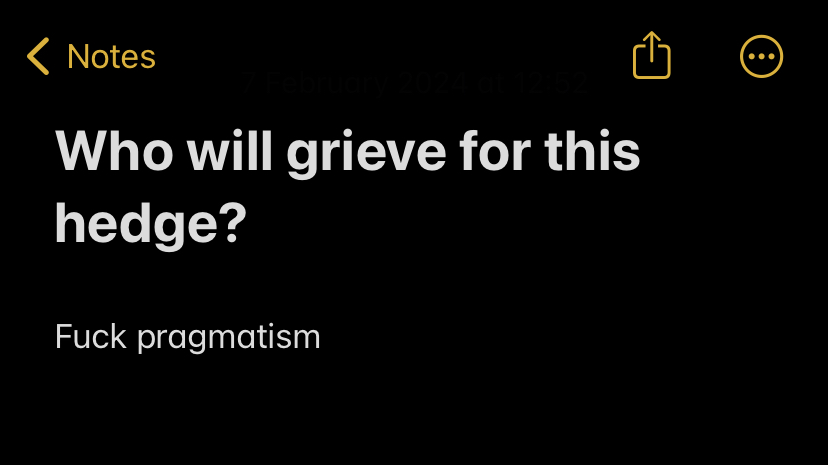
“I will. I will grieve for this hedge.”

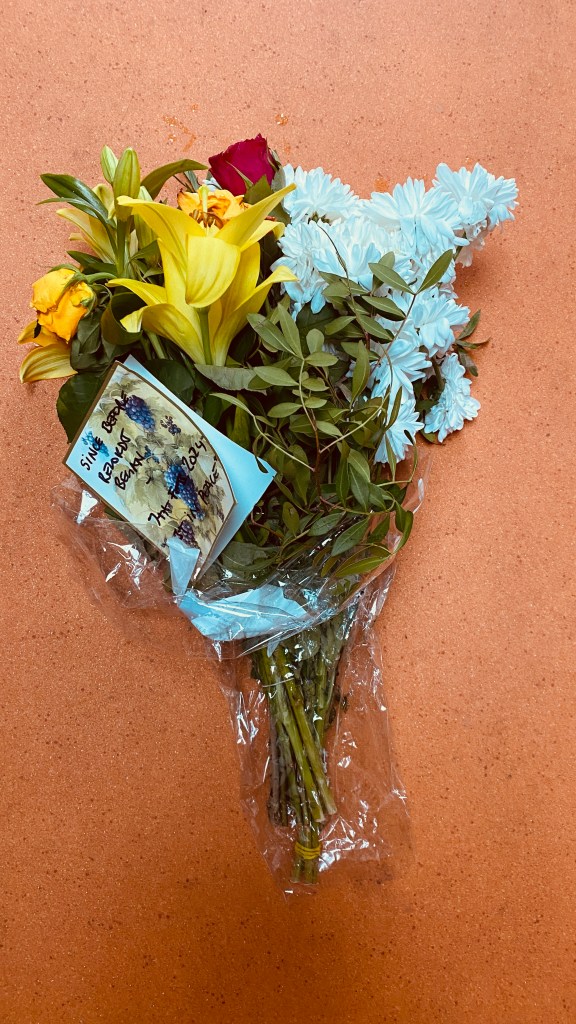
I laid a floral tribute when the workers had gone home.
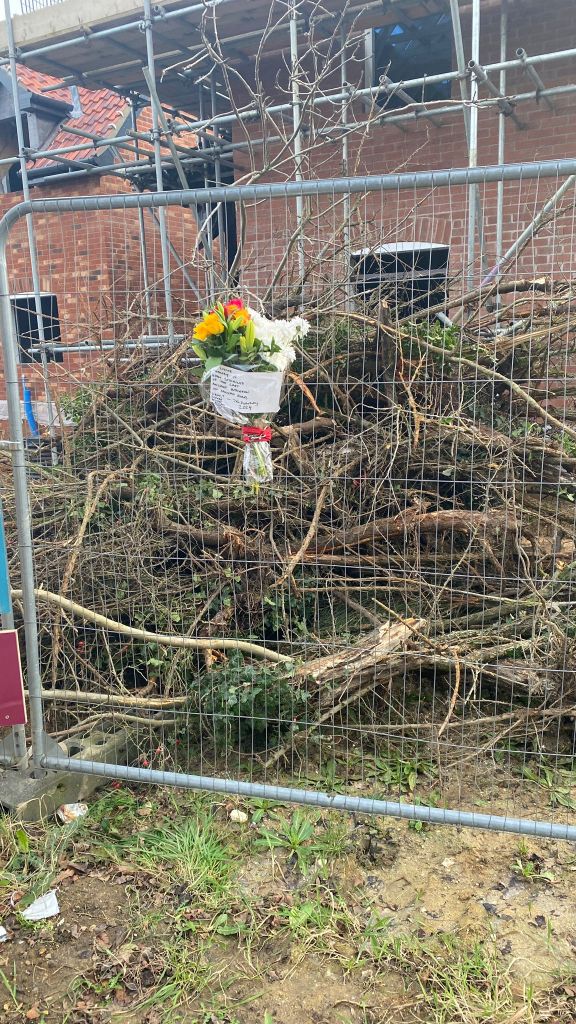
They found it in the morning. They gathered round.
A local councillor came to see it and to talk to the site workers.
I wanted to tell you that I went and retrieved my floral tribute to the wretched remains of the hedge after 10 days spent tied onto a heras fence.
I wanted to remove the evidence of my sentiment before the plastic started to tatter and the ink started to run and the blooms crisped and withered. I wanted to remove it when I was ready.
I didn’t want the decision to remove it to be made without me.
If you’re interested in the ideas behind my spontaneous intervention you might like to read Dr Jennifer Atkinson’s piece Mourning Climate Loss: Ritual and Collective Grief in the Age of Crisis.
May I pull out a couple of strands for you? Atkins says:
Ecological grief is a precise kind of pain. It is ‘disenfranchised grief’ in that it is keenly felt but has no recognised ritual to mark it.
Dwelling within ecological grief requires us to come to terms with what it means to be human in this age of unprecedented assault on life.
We live in a culture built on a hierarchy of lives that matter and lives that don’t. Expanding who or what we grieve for is to expand the circle of human empathy.
Grieving is a process of relearning the world which compels us to face how we must ourselves change and renew our relationships if we are to move forward from here.
I think it’s up to us to recognise and name and mark our losses – as an act of protest, as an act of love – as we spin on our tiny precious Earth together.
 Loula Yorke